Making
Bespoke timber pieces and small buildings, designed and drawn for making
I’ve always found I design better when I understand how something will be made. Some of my projects go further: I draw every part myself, ready to be cut by CNC machine and assembled by hand. The drawing is no longer just a set of instructions for someone else to interpret. It is the making.
What I make
- Small timber buildings, such as garden studios and outbuildings, where a standard product won’t fit the site or the house
- Bespoke furniture and joinery, such as tables, shelving and built-in pieces
- One-off elements within larger projects, such as a staircase, a screen or a porch
How it works
I design each piece in 3D, then prepare cutting files for CNC fabrication, usually in sustainably sourced plywood or timber. Every part is checked digitally before anything is cut. Then the pieces are assembled, sometimes by a builder, sometimes by the client, sometimes by me. Because everything fits first time, complex shapes become possible on a modest budget, and there’s very little waste.
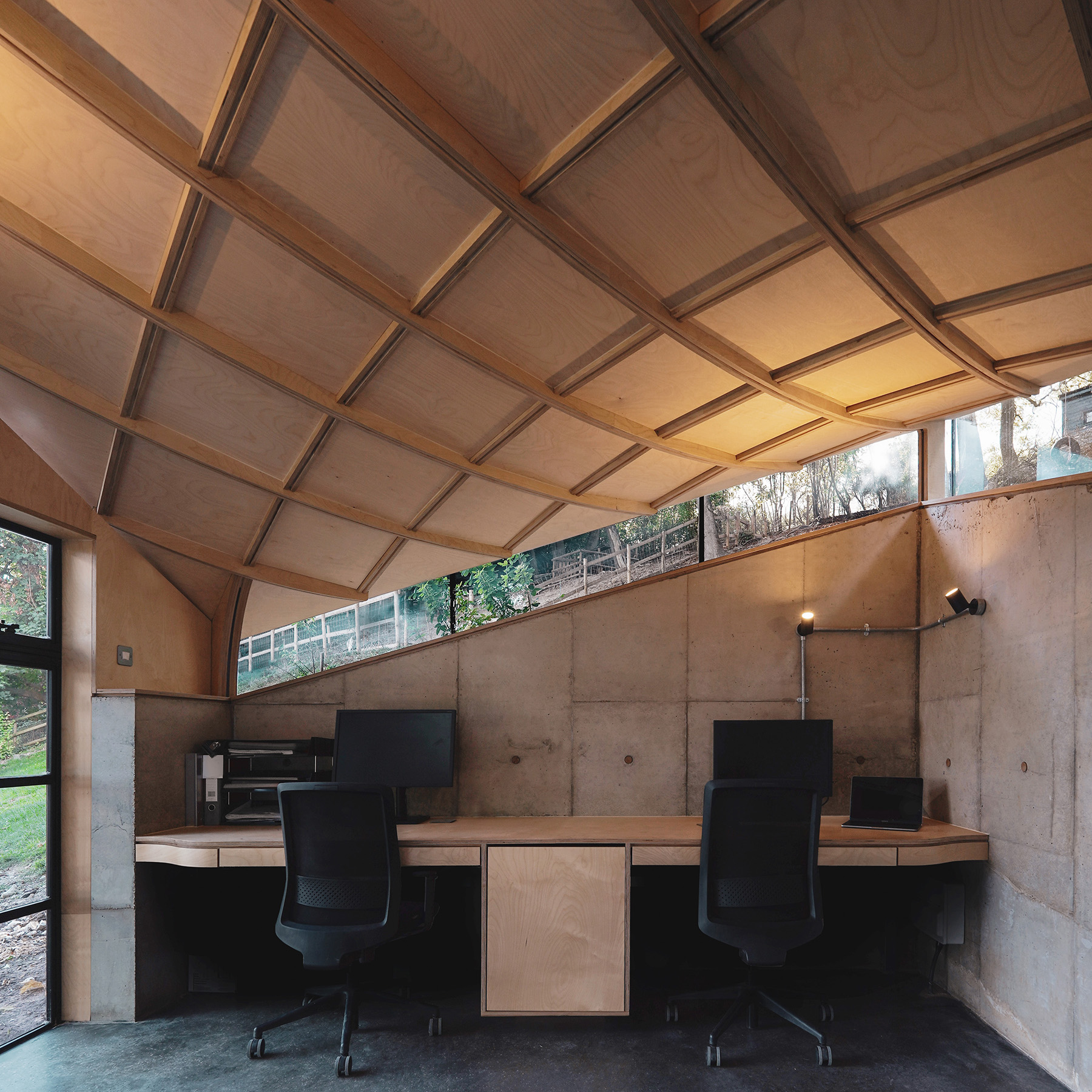
Bat Wing Studio
Bat Wing Studio is a garden studio made from 141 unique plywood parts, each modelled and checked before a single sheet was cut. It’s the clearest example of what this way of working makes possible. I’ve written about it in What Digital Fabrication Makes Possible.


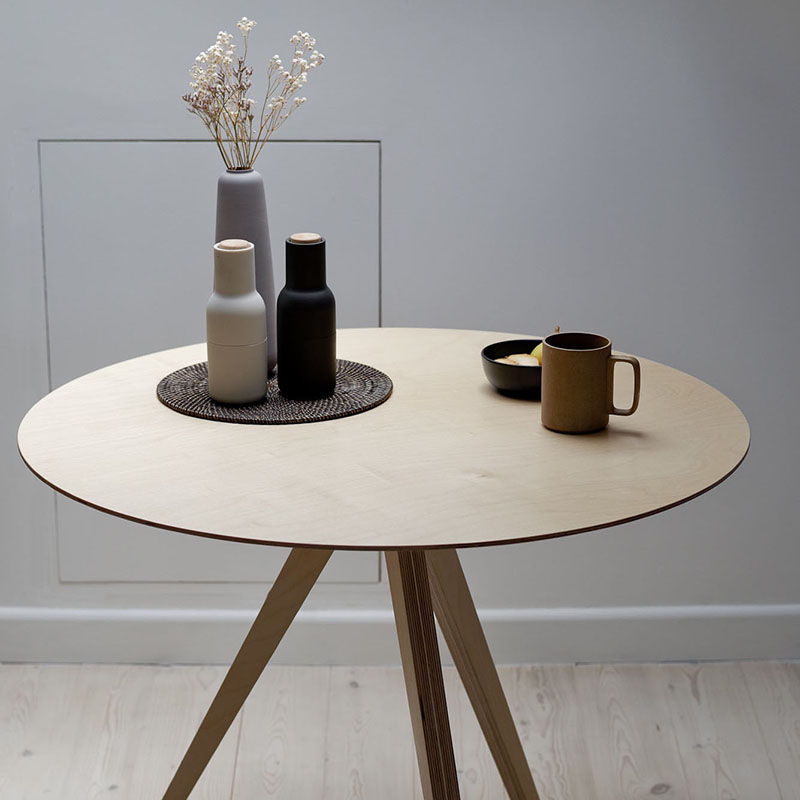
Dining table
This table was designed to be cut from half a sheet of ply with minimal wastage.

Making and thinking
Making by hand has shaped how I practise since my time at the RCA. I write about it in Practising Architecture: Care, Conscience and Construction.
Talk to me about a commission →
Contact
Not sure where to start? Book an Old House Health Check
︎Contact Form
︎ info@tparsons.co.uk